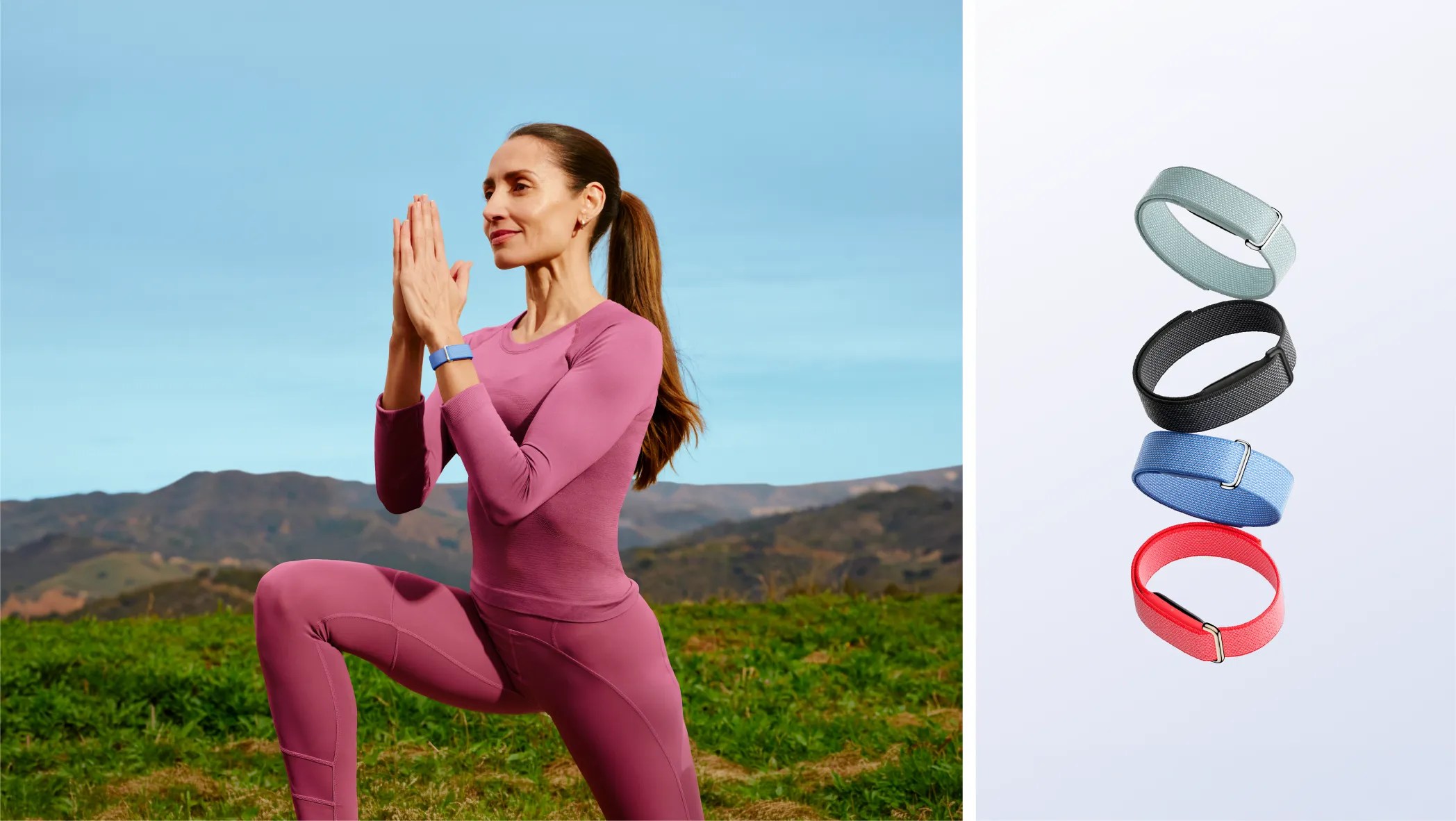
Google’s newest wearable is deliberately incomplete. The Fitbit Air is a tiny, bean-sized sensor module that snaps into a wristband and does exactly one thing: it measures your body continuously. There’s no screen to check, no notifications to clear, and no app store. All the intelligence lives on your phone inside the Google Health app, while the hardware on your wrist focuses purely on gathering raw data for up to seven days between charges.
That simplicity is the point. By removing the display, Google cut both weight and power draw. You’re meant to wear it all day and night without noticing it.
What the sensors collect and how they do it
Inside the bean-sized module sits an optical heart rate sensor that uses photoplethysmography, or PPG. Small LEDs shine light into your skin, and photodiodes measure how much of that light bounces back. Because blood absorbs light, each pulse changes the reflection pattern. The sensor reads these changes to capture your heart rate roughly every two seconds, along with heart rate variability. It also uses red and infrared light to estimate blood oxygen saturation, or SpO2, while you sleep.
Movement and temperature add the missing context. A skin temperature sensor and a combined accelerometer and gyroscope detect motion patterns, classify sleep stages, and spot subtle temperature shifts that can signal recovery or illness. Basic algorithms on the device itself handle activity classification and store about a week of data locally. When your paired phone is nearby, everything syncs automatically over Bluetooth for deeper analysis.
You won’t be swiping through menus. A double-tap wakes a small LED that shows battery or sync status through colored light patterns. Beyond a silent vibration alarm, there aren’t haptics buzzing for texts or calls. If you want to see your steps or heart rate zones, you open the Google Health app on Android or iOS.
Why going screenless changes the trade-offs
Removing the display redefines what this device is competing with. A smartwatch like the Pixel Watch puts information and control on your wrist, but that convenience costs battery life and attention. The Fitbit Air is built for people who want recovery insights and trend data without another screen demanding their gaze. It’s light enough, roughly five to twelve grams depending on the band, that you can wear it alongside a traditional watch or a Pixel Watch if you prefer.
The business model also differs from some screenless rivals. Whoop requires an ongoing subscription to access data, meaning the hardware becomes largely useless if you stop paying. Google takes the opposite approach. Core tracking, including steps, sleep stages, resting heart rate, SpO2 trends, and irregular rhythm notifications for potential AFib, is included after the one-time hardware purchase of roughly ninety-nine to one hundred thirty dollars. An optional Premium subscription adds Gemini-powered AI coaching and advanced insights, but the basics don’t expire.
There are honest limitations. Wrist-based PPG sensors are excellent for passive monitoring and sleep, but optical readings can drift during high-intensity exercise when movement and sweat interfere with the light path. Rapid arm motion, like burpees or heavy bag work, creates noise that algorithms can’t always filter out. Users who need precise heart rate data for interval training may still want a chest strap or bicep-based alternative for those sessions. Accuracy also depends on fit. The sensor needs to sit flush against the skin without sliding, and a loose band during a run can produce gaps in the data.
Where the Fitbit Air wins is consistency. A device that’s comfortable and doesn’t need daily charging tends to stay on the wrist. That continuity produces better long-term trends than a tracker that gets left on the nightstand. For anyone already inside Google’s ecosystem, the data aggregates neatly in the Google Health app alongside other devices, much like how Android updates continue to tie Google’s hardware together. And because the app works across both Android and iOS ecosystems, you don’t have to switch phone platforms to use it. You could wear the Air on one arm and a Pixel Watch on the other, and the phone app reconciles both streams without forcing you to pick a favorite.
The Fitbit Air isn’t trying to replace your phone or your watch. It’s trying to remove every excuse to stop wearing a health tracker. In a category obsessed with brighter screens and faster processors, Google bet that invisible data collection and a seven-day battery are more valuable than another glowing rectangle on your wrist. It’s a bet that makes sense for anyone who cares more about monthly trends than minute-by-minute updates. Sometimes the best interface is no interface at all.